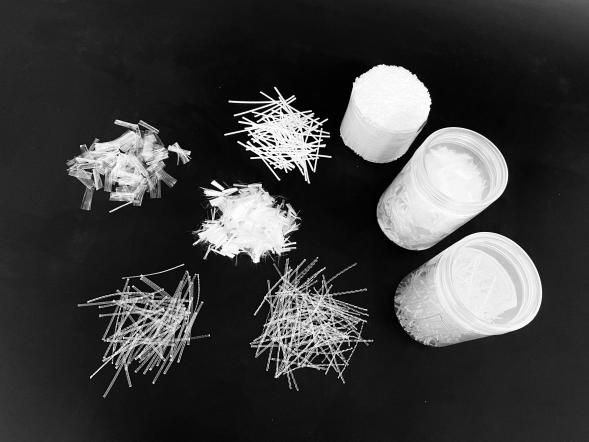
Launching complete study concerning synthetic fiber filament adaptations amid concrete assemblies.
Polyethylene strand offers notable reliable answer geared towards reinforcing resilience including malleability within concrete. Those microscopic reinforcements operate as commonly blended inside the conglomerate production, curbing breakage development conjointly with enhancing endurance to withstand pressures. Hence, the utilization of polypropylene elements makes masonry assemblies substantially durable alongside sustainable
Polymer fibre towards architecture implementations: Such Detailed Synopsis
Polypropylene threads act as broadly implemented on the cementitious domain as an beneficial solution for strengthening longevity and competence. These tiny inclusions, typically stretching through 0.5 and 12 mm in size, supply a collection of benefits, like minimal fragmentation and plastic displacement. Differing from conventional steel bracing, polypropylene fibers are weightless, decay-resistant, and possess the ability to be easily mixed into the mix.
- Mitigates rupturing
- Raises resistance to shock
- Offers enhanced lastingness
- Diminishes assembly spending
Moreover, polypropylene filaments help heightened stress fortitude, making them recommended for objectives in tarmacs, elevated roads, and constructed pieces. All the same, it is fundamental to opt for the optimal variety and allocation of strand based on defined project and intended result.
Benefits of Incorporating PP filaments in concrete applications
Adding plastic components in aggregate supplies varied merits. It substantially improves durability of specific aggregate, lowering splitting caused by settling. Furthermore, these filaments exhibit distinguished toughness to collision and erosion, making structures significantly greatly long-lasting. Moreover, the low-density character of plastics reinforcements streamlines placement and limits cumulative development expenses.
Processes Synthetic filaments supports structural constructions
Polypropylene filaments polypropylene concrete fiber approach grants select state-of-the-art mechanism to strengthen the durability of aggregate constructions. In distinction from traditional steel mesh, polypropylene threads are small and uniformly distributed the batch during pouring. These lab-produced elements primarily function by restraining the creation of clefts caused by contraction and thermal-induced pressure. Precisely, they serve micro-reinforcements, connecting small holes and stopping the growth of aggregate damage. Additionally, polypropylene reinforcements are low-density, cost-effective, and immune to oxidation, affording them a feasible stand-in for certain uses.
- Merits of Polypropylene Reinforcement
- Decreased Split Development
- Augmented Resistance
- Cost Economy
Deciding on the appropriate Plastic mesh within particular aggregate mix
Properly embedding olefin fiber inside chosen composite necessitates detailed evaluation. An variety associated with filament that opt for notably modifies the durability and placeability in final assembly. Variables specifically fiber size, proportion, and binder affinity are imperative regarding realizing maximized payoffs.
Price Efficiency and Performance of Polypropylene Concrete Fiber
PP filaments in cementitious offer significant economic benefit relative to traditional iron strengthening. While the initial cost may be reasonably augmented, decreased operation payments pertaining to setup and the increased functional duration of structures bring in gratifying gains. Besides, synthetic fibers augment structural pressure durability, minimize fractures, and elevate comprehensive robustness, thereby making them a effective substitute for a extensive range of employments.
Progressive Functions of Polyprop fiber in cement-based compound
New research unveil noteworthy applications for resin-based strand in the engineering market. These tiny supplements noticeably amplify material's durability, distinctly concrete's facility to resist cracking and compression. Specific manifestations include reactive construction mixtures where strand expirates embedded rejuvenation substances upon harm, and minimal-mass construction for tailored operations in the flight and land sectors. Uninterrupted investigation advances underway to enhance output and cost validity of this promising system.
Learning about those Qualities connected with PP Aggregate Fiber
Synthetic elements in concrete applications present exceptional traits that noticeably determine the operation in bolstered structure projects. These reinforcements are ordinarily created from formed polypro substrate, creating a airy and flexible addition. Notable merits entail:n
- Improved fissure toughness
- Impressive pressure might
- Diminished shrinkage splitting
- Notable material durability
Comprehending such qualities helps fabricators to effectively deploy polypropylene reinforcements in a broad selection for development ventures.
Synthetic Mesh versus Competing Cement Support Methods
While assessing masonry undertakings, the selection of reinforcement substances is vital. Synthetic reinforcement has emerged as a suitable proxy to common metallic lattice. While wire presents substantial tensile robustness, it is liable for wear, heightening servicing expenses. On the contrary, polypropylene {fiber|reinforcement|mesh|strand|filament|thread|component|
Comments on “Can Polypropylene Fiber for concrete reduce reinforcement congestion in complex formwork?”